Growth isn’t about spending more. It’s about ensuring every pound is really working.
ConservatoryLand had built a successful business. Manufacturing its own products and supplying customers across the UK, the company had invested consistently in marketing, generating enquiries through paid advertising, organic search, email and other channels.
By most measures, the marketing was performing well. But success can sometimes hide inefficiency.
The leadership team recognised that, while each activity appeared to deliver results, they couldn’t be certain the overall marketing investment was working as hard as it could – and whether all strands were pulling in the same direction.
+36%
lead generation
+64%
sales growth
Over the years, however, it can become increasingly difficult to see how every activity contributes to the same commercial objective. That was exactly the situation facing ConservatoryLand. Website performance was strong and lead generation was healthy, while e-mail marketing was active and brand awareness continued to grow.
Yet each channel was largely being measured in isolation. There was no single view of how customers moved from first impression to completed sale, making it difficult to identify where opportunities were being lost.
Before recommending any new activity, we believed the business first needed a clearer understanding of how its existing investment was performing as one connected system.
Working alongside the ConservatoryLand team, we mapped the complete buying journey, following prospective customers from their first interaction with the brand through to conversion. The process highlighted areas where small points of friction were creating larger commercial consequences.
Rather than beginning with campaigns, we began with the customer.
Some visitors were leaving the website before engaging with the online conservatory builder. Automated e-mail journeys weren’t always supporting customers at the stage they had reached in the buying process. Opportunities to re-engage interested prospects were being missed.
None of these issues, in isolation, represented a significant problem. Together, however, they prevented the marketing from achieving its full potential.
Instead of recommending increased spend, we focused on improving how every element worked together.
The website was refined to encourage greater use of the online conservatory builder, while e-mail journeys became more relevant to different customer needs and buying stages.
Paid media was refined and better targeted, while organic content addressed common questions and misconceptions surrounding modern conservatories. Radio introduced the brand to prospective customers who had not yet entered the buying journey.
Every decision was guided by the same principle. Not: “Which channel performs best?” But: “How does each activity move customers closer to a sale?” That shift in thinking transformed marketing from a collection of individual tactics into one connected commercial strategy.
The results demonstrated the value of improving performance before increasing investment.

Lead generation increased by 36% and sales grew by 64%. At the same time, the cost of acquiring new customers reduced significantly, improving the overall efficiency of the company’s marketing investment.
More importantly, ConservatoryLand gained something that couldn’t be measured by campaign reports alone. The business no longer viewed marketing as separate channels competing for budget. It viewed marketing as a single growth system, with every activity contributing towards the same commercial objective.
As businesses grow, marketing often evolves organically. New channels are added, campaigns are introduced and technology develops. Each individual decision makes sense at the time.
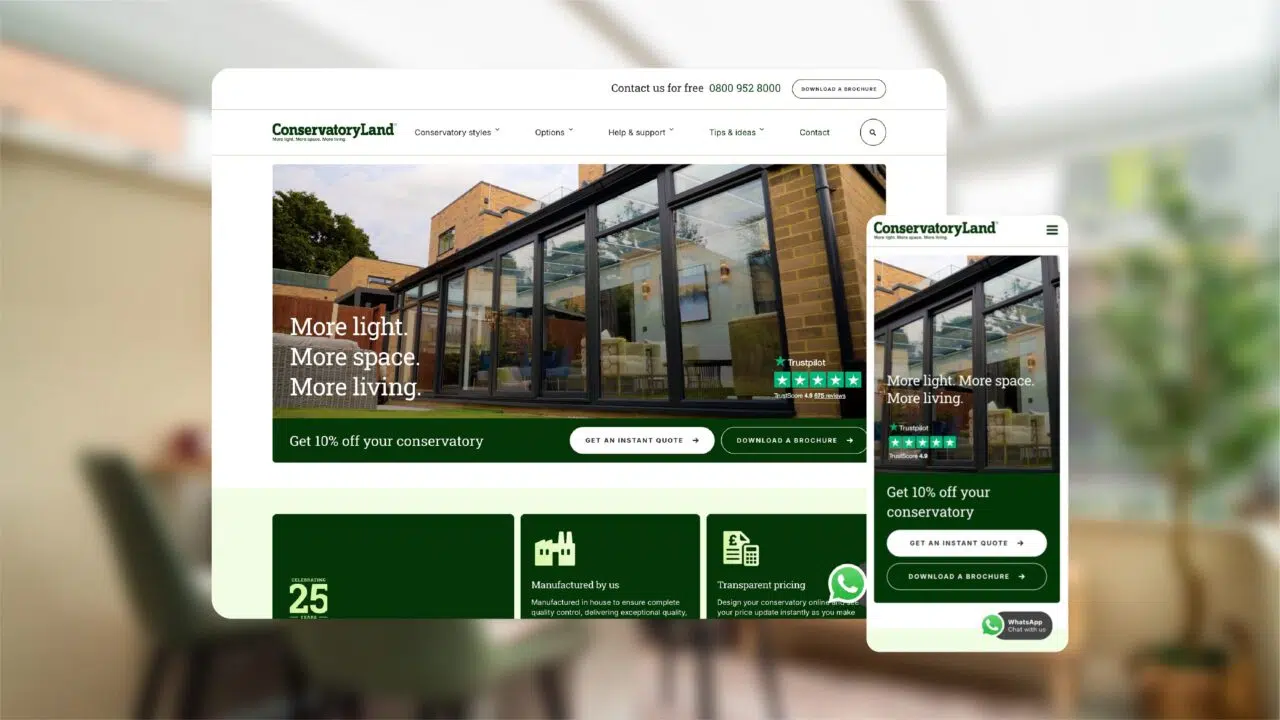
Their professionalism, clear communication, and understanding of our goals have been greatly appreciated and led to some excellent results. Compared to last year, there has been a massive improvement in the balance between marketing spend, lead costs and conversion rates.
Rob Smith
General Manager




If you're ready to grow, let's talk.
It starts with a proper conversation about where your business is going and what’s standing in the way — not a pitch deck.